Description
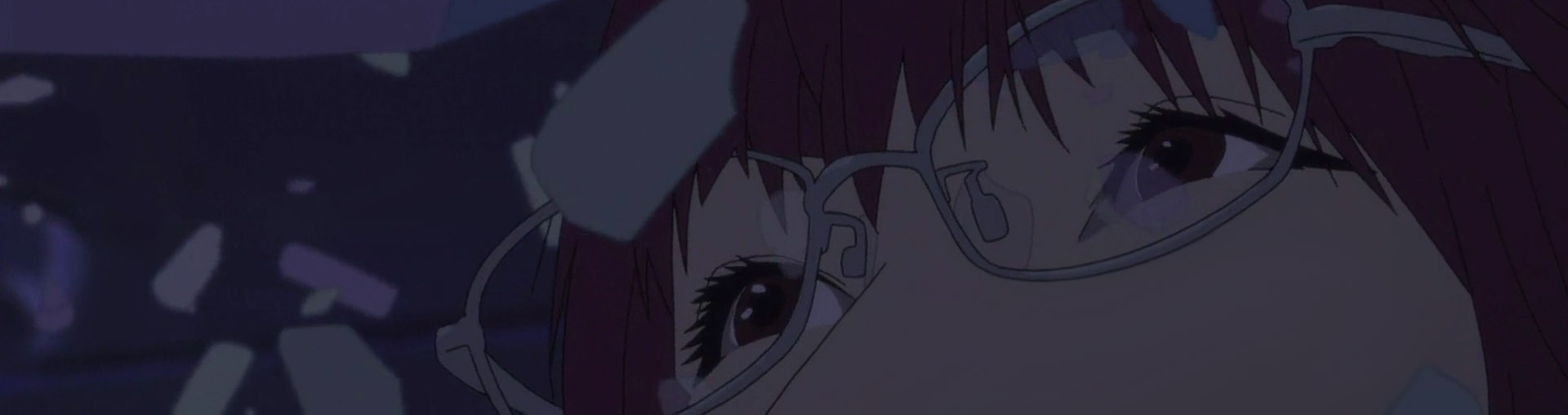
Kaiba tells the story of a young man named Kaiba who has no memory of who he is other than a locket with a photograph of a girl. In addition, memories can be stored like computer data and passed from body to body on some form of a chip. (Taken from IMDb)
Thoughts
It’s been a while since I wrote on this blog, and if there’s an ironic constant thread throughout: that is “Change”. Knowing that I’m not the same person I was once when I watched all of the titles I’ve written about. That even when experiencing the same piece of art, I’m in another place and time in the universe despite not always being very aware of it. Just like a tree: we keep growing, and building upon the experiences we have gathered.
Kaiba has been one of the strangest works I’ve encountered, both in content and in the reaction it had in me: When I was a young teenager I dreamed about a universe where forgotten memories would float in an ocean of lights. Then, strange beings would analyze and feed themselves from these lights. It was intended to be a story that pondered on the nature of memories but I never really knew what to do beyond this concept so it just lingered there… That was until I watched this show and I just surrendered the idea.
I didn’t feel like my idea was diminished, on the contrary, I felt relief. I’ve never thought that I could see something so close to what I was envisioning. On top, it had so much more added; themes that I wouldn’t even have internalized until years later. Many ideas that are eons beyond my little brain. Kaiba has been a first and a last; No other piece of media has earned this achievement.
It baffles me that somehow I forgot to add it on my original 100 list since it clearly was in there but once I noticed it was already too late and thus I just stuck to the intended list.
Regardless, the way it explores themes about identity, perceptions, bodies and memories throughout a clearly progressive narrative, while also portraying a series of extremely solid episodic tales in its first half. Beginning by laying the grounds on how its world works and leaving the second half to tie the main plot and mysteries. It’s all just beautifully constructed.
I’ve never been a big fan of the second half. Not that is bad but after experiencing the full scope of the world.. Just knowing what happens to the main characters and finding a resolution to the story in a satisfying way… I KNOW we have been told that good stories should be like thaaaat… But it feels short to “whatever promise” I was anticipating, even rushed at no fault of its own.
But that’s because my mind is always stuck on all of the existential doors that were left open. Doors that just do not have an answer: How precious is our body? How disposable are they? Not just by us but by the world: How much agency do we have to them? How much control do others have on us? How do people interpret our bodies and how we play with our image to fit our perceptions of ourselves. How much the way we look alters the way we interact with the world and the world back to us?
It is a show best explained by the questions and dilemmas it reflects upon. The weight memories carry over in crafting our identities. Not only memories as static elements but as narratives that we choose to rewrite, to keep and forget. Memories that no matter how precious, cannot escape the limits of our decaying bodies and the washing shores of time; Even phrases as “time is money” might quite literally go beyond the quantitative attributes we have assigned in terms of science and economics as time is not bounded to a linear metric but how we perceive our experiences on a more chaotic, non-linear manner and how we value time on a more arbitrary, symbolic, grand scheme of things… if that makes sense… Sorry for the mouthful there.
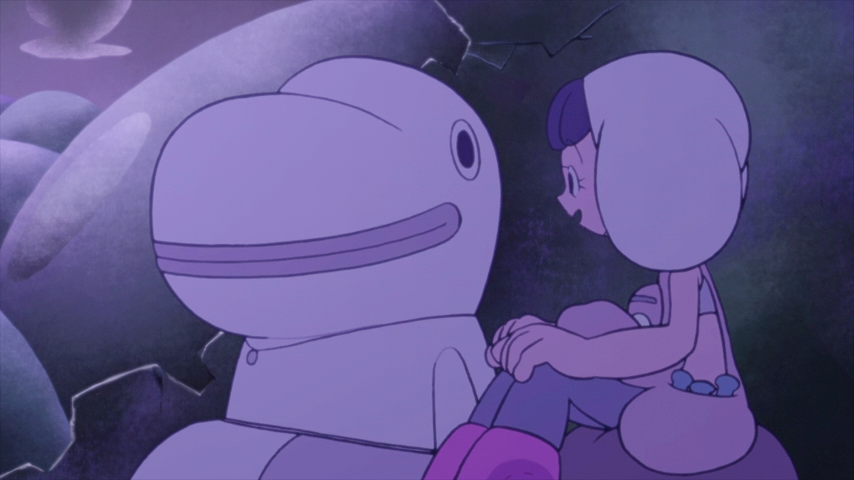
The cartoonish, colorful and simplistic designs over the ethereal liminal spaces really create this disorienting effect that you are in a completely foreign universe. It’s cutesy and absurd enough to suspend your disbelief about all the crazy wackiness you’re about to experience but the music, beats and pacing strike you back as you process a lot heavy subjects that are highly emotional but where you are also distant enough in order to process what the hell just happened.
One would say it is “one of those shows” but it is not even one of those (I hope this will make sense). It is certainly deceiving, but it doesn’t feel like it is trying to do so. It feels genuine, and is not trying to pull off the rug under you on purpose. The creators are just telling the story that needs to be told. It however feels oddly atemporal… Kaiba is just built differently. Is just a weird experience overall. If I could make an analogy: it’s what Fantastic Planet is to Metal as Kaiba is to Progressive Metal… if you know, you know. (I only made sense to me, didn’t I? hahaha)
At the same time I think I don’t have to recommend it. If it calls you, it will. It has enough substance that if something resonates; whether you like it or not; Something will stick with you for sure. For me, Whenever I thought about this show, I used to think of my favorite episodes and moments, but now I think about the strange uncertainty that it provoked, along with bemusement of one of the most ingenious worlds I’ve seen.
Now I realize… ever since I watched Kaiba, my own concept of a… “visual library” LOL… Takes a lot of visual cues and inspiration straight out of this anime. It is a strange beloved gem that has its own special kind of allure.